From the thunderous thump of a bass drum to the light tinkling of chimes, drums, and percussion instruments have been used for centuries in all kinds of music. Whether you’re a professional musician or just starting out, understanding the different types of drums and percussion instruments can help you find the right sound for your music. So let’s explore the world of drums and percussion, from hand drums to gongs, so you can make some beautiful noise.
Types of Drums
Drums come in a wide variety of shapes, sizes, and sounds. Drums are a popular and versatile percussion instrument with many different types, including hand drums, membranophones, tubular or kettle drums, bass drums, and slit drums. Each type has its own unique sound and playing style, and there is a drum for every musical style and preference.
Hand Drums
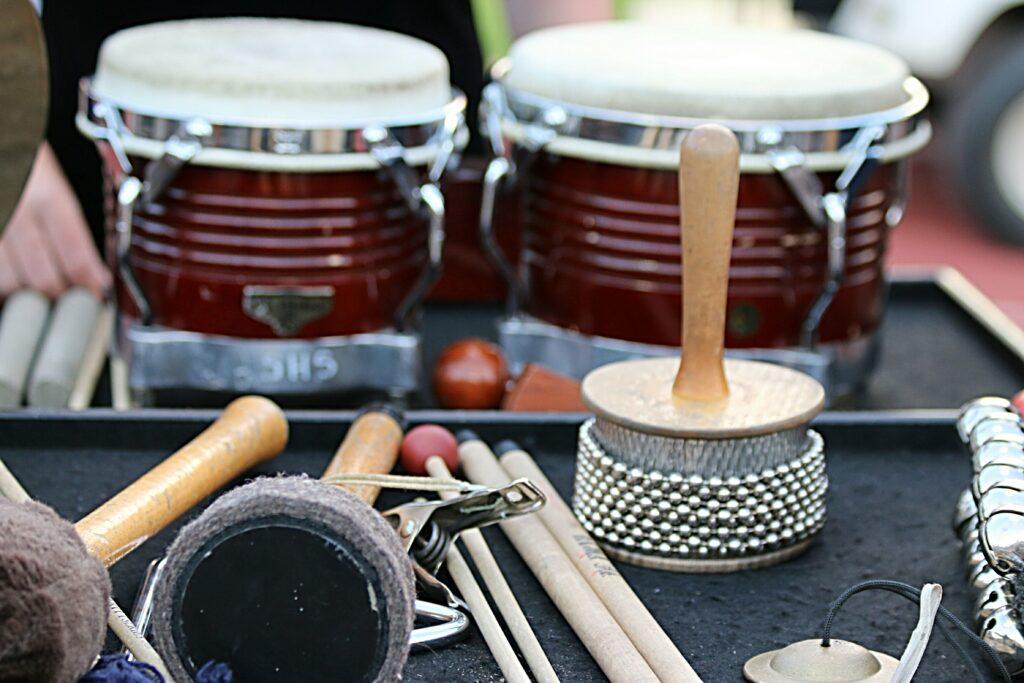
Hand drums are an essential part of any percussionist’s toolkit. Whether it’s a djembe, ashiko, frame drum, or even a bongo, these instruments bring an array of sounds to the table. Depending on the size and shape of the drum, different tones can be achieved by adjusting the tension in the head. Hand drums are often used in traditional music such as African, Middle Eastern, and Native American styles. They also offer great flexibility for modern genres such as hip-hop and pop.
For those who want to explore various tones without needing an entire kit setup, hand drums are an ideal choice. From adding subtle accents to providing vibrant rhythm sections, hand drums can make any song come alive with their unique sound.
Membranophones
Membranophones, or drums, are the most common type of percussion instrument. Whether it’s a snare drum in a marching band, a kick drum in an electronic music production, or a concert bass drum in an orchestral performance, drums provide a unique and powerful sound that can be used to add texture to any musical setting. Drums come in a wide variety of sizes and shapes ranging from small frame drums that are only 6-8 inches in diameter to larger bass drums that may be up to 18 inches deep. The sound of different types of drums varies depending on the material used for their shell, heads, and hardware. Acoustic drums typically have a loud and deep tone while electronic drums offer a more precise sound with greater control over volume and dynamics.
Drum kits usually contain several drums such as snares, toms, and cymbals arranged together for maximum sonic potential. Depending on the genre of music being played, different types of acoustic and electronic drum sets may be used to create a desired sound. From jazz bands to rock bands and even orchestras, membranophones are essential elements in any ensemble setting.
Tubular or Kettle Drums
Tubular or kettle drums are percussion instruments shaped like a cylinder and usually made from metal or wood. They produce a deep, resonant sound that is often used in orchestral music or to add an atmospheric effect to certain genres of music. Tubular drums come in many sizes and can range from 6 inches up to 24 inches in diameter. The pitch of the drum can be manipulated by adjusting the tension on the heads and changing the size of the drum. Kettle drums are usually played with soft mallets but can also be played with sticks for a more intense sound.
Some tubular drums are mounted on stands so they can be struck more easily while others have pedals attached to them so they can be played like a bass drum. Tubular drums are also commonly used in marching bands, as they provide a loud and powerful sound that carries well over long distances. Tubular drums are versatile instruments that provide players with a unique sound that cannot be achieved using any other type of percussion instrument.
Bass Drum
Bass drums are the largest of all drum types and are used to create a deep, powerful sound. The most common type of bass drum is the concert bass drum which is typically 24 inches in diameter and 18 inches in depth. These drums produce a low, booming tone that can be heard from far away distances. Bass drums are often used to accompany other percussion instruments such as snare drums, cymbals, and even electronic drums. It is this combination that gives a full and balanced sound to any performance.
The modern-day bass drum has evolved over time and now comes in many different shapes, sizes, and materials. The most popular choice for acoustic drum sets is the kick drum which is usually 18 inches in diameter and 22 inches in depth. Electronic bass drums are also becoming more popular due to their versatility; they allow players to control the volume and tone of their playing by using foot pedals or digital interfaces.
Regardless of its size or shape, the bass drum provides an essential backbone for any musical performance; it creates a foundation for other instruments to build upon while also adding layers of rhythm to any song or composition. For this reason, it is an integral part of any drummer’s setup – whether acoustic or electronic – providing them with a deep, powerful yet versatile sound that cannot be replicated with any other type of instrument.
Slit Drum
Slit drums are an ancient type of percussion instrument used in various parts of the world, including Africa and South America. They consist of wooden blocks or logs that have been cut lengthwise to create a hollow chamber with a slitted top. This allows sound to be produced when the drum is struck with sticks, mallets, or even hands.
Each slit drum is tuned to a specific pitch and can produce a range of sounds depending on how it is played. Its low, deep tone has been used for centuries to signal events such as battles or important announcements, as well as provide accompaniment for traditional songs and dances. In recent years, they have also become popular in modern musical performances due to their distinct sound and unique appearance.
Slit drums come in many different sizes and shapes and are commonly crafted from hardwood such as mahogany or oak. The larger the drum, the deeper the sound; however they can also be made smaller for higher-pitched tones. Because there is such a wide variety available, these instruments are highly versatile and can be used in any type of performance – from folk music to jazz – adding an interesting dynamic to any music ensemble.

Types of Percussion Instruments
Percussion instruments are a large and diverse group of musical instruments that produce sound through striking, shaking, or scraping. Percussion instruments provide rhythm and texture to the music. Popular types include xylophone, marimba, vibraphone, glockenspiel, cymbals, gongs, chimes, bells, drum machines, synthesizers, and miscellaneous instruments. Each type has a unique sound and contributes to creating complex musical compositions.
Xylophone and Marimba
Xylophones and marimbas are two types of percussion instruments that produce sound when struck with mallets or sticks. Xylophones are composed of wooden bars mounted on a frame and create a bright, bell-like tone. Marimbas, on the other hand, use metal bars to create a mellow yet powerful sound. These instruments are often used in classical, jazz, and world music genres to provide melodic accompaniment.
Xylophones can range from small handheld models to large concert versions made up of multiple octaves. The traditional xylophone is typically tuned diatonically, meaning each bar corresponds to a specific note; however modern versions can be chromatically tuned for more versatility in playing styles.
Marimbas come in many different sizes as well; the larger ones often have a deep bass resonance that can reach up to four inches in diameter! They’re also commonly found in marching bands; the tenor drums being the most popular type used.
Vibraphone and Glockenspiel
The vibraphone and glockenspiel are two percussion instruments that create a variety of sounds when struck with mallets or sticks. The vibraphone has metal bars mounted on a frame, similar to the marimba, and produces an ethereal sound when played. It also features rotating discs called “vibrato” that add a unique vibrating effect to the tone. Used in jazz, pop, and classical music, the vibraphone can provide melodic accompaniment or become a featured solo instrument.
The glockenspiel is another type of percussion instrument made up of tuned metal bars arranged in an ascending scale. Unlike the vibraphone, it produces a bright, ringing tone that evokes feelings of nostalgia and joy. Commonly found in marching bands and orchestras, it’s often used to add texture to compositions or provide counter melodies alongside other instruments.
Cymbals, Gongs, Chimes, and Bells
Cymbals, gongs, chimes, and bells are percussion instruments that produce a variety of sound effects. Often used in orchestral and marching band settings, these instruments can add texture and depth to musical compositions. Cymbals are one of the oldest types of percussion instruments. Producing a loud crash when struck, they come in a range of sizes from small hand-held models to larger cymbal sets used by drummers.
Gongs are large metal discs with a rounded shape and deep tone that are often associated with Eastern cultures. Chimes are tuned metal bars hung on a frame that creates a ringing sound when struck. Bells provide melodic tones and come in various sizes and pitches.

Drum Machines and Synthesizers
Drum machines and synthesizers are popular choices for modern musicians looking to add unique sounds to their music. Drum machines are electronic percussion instruments that use pre-programmed or recorded rhythms to create beats, grooves, and fills. They can be used in many different musical genres from hip-hop to electronic dance music.
Synthesizers are electronic instruments capable of producing a wide range of sounds including realistic instrument tones, sound effects, and more abstract noises. They can also be used to manipulate existing audio recordings. Both drum machines and synthesizers provide an excellent way to add interest and variety to your music while still maintaining a consistent rhythm or tempo.
Miscellaneous Instruments
The miscellaneous instrument is a term used to describe a wide variety of drums, percussion, and other musical instruments. These include items such as shakers, tambourines, cymbals, woodblocks, triangles, and many others. Although not as popular as traditional drum sets or electronic percussion kits, these instruments provide unique sounds that can add flavor and texture to any music production.
Shakers are one of the most common types of miscellaneous instruments found in modern music productions. They come in a variety of shapes and sizes with different materials providing different tones. Popular examples include maracas, egg shakers, cabasas, rain sticks, and more!
Tambourines are another popular choice for adding texture to a song or track. Available in various sizes from small handheld models to larger ones mounted on stands they can produce a range of sounds from a light jangle to booming accents.
Finally, there are cymbals that come in various sizes from small hi-hats to large crash cymbals offering plenty of sonic options for producers looking for a bright shimmering sound or powerful crashes.
Conclusion
In conclusion, it is clear that there are many different types of drums and percussion instruments available for use in music production. From ancient African drums to modern electronic drums, each has its own unique sound and capabilities. When used correctly, these instruments can help create a full and dynamic soundscape that can captivate and move audiences. Whether you are looking for a vibrating vibraphone or a thundering bass drum, the right percussion instrument can bring your music to life.