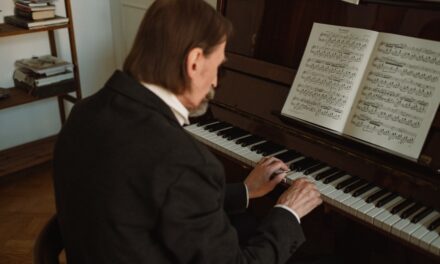
The 21st-century classical music landscape has undergone an intriguing development marked by the fusion of conventional and avant-garde methods. As boundaries are constantly being stretched and genres are becoming more hazy, musicians and composers are embracing a wide variety of styles and inspirations. During this time, there has been a move toward interdisciplinary partnerships, an exploration of unusual sounds and structures, and a resurgence of interest in traditional methods. The present classical music landscape, which includes a wide spectrum of genres from modernist compositions to minimalist aesthetics, electronic experiments to the merger of traditional and popular music, is a reflection of the constantly shifting dynamics of our society. The scenery is colorful and energetic, showcasing the limitless inventiveness and progressive outlook of modern classical composers and musicians.
Prominent Composers of Modern Classical Music
The ever-evolving genre of contemporary classical music highlights the inventiveness and originality of contemporary composers. The works of renowned contemporary classical composers push the limits of traditional composition and challenge the listener’s sense of sound, ranging from ground-breaking symphonies to experimental electronic pieces. These composers are still transforming the classical music landscape with their unique instrumentation and combinations of materials from other musical traditions. This article examines the lasting effects of some of the most significant figures in modern classical music, who have had a lasting impression on the genre with their original compositions.
John D. Adams
The second President of the United States, John Adams, was crucial in forming the foundation of the country. Adams, who is renowned for his intelligence, perseverance, and dedication to public duty, made a substantial impact on the American Revolution and the creation of the United States as an independent nation. He showed a strong affection for his nation and a steadfast faith in the ideals of justice and liberty throughout his life. The main features of John Adams’s life, his achievements, and his influence on the creation of the United States will all be covered in this article. Adams’s steadfast commitment to the principles of the American Revolution made a lasting impression on the history of the country, from his service in the Continental Congress to his presidency and beyond.
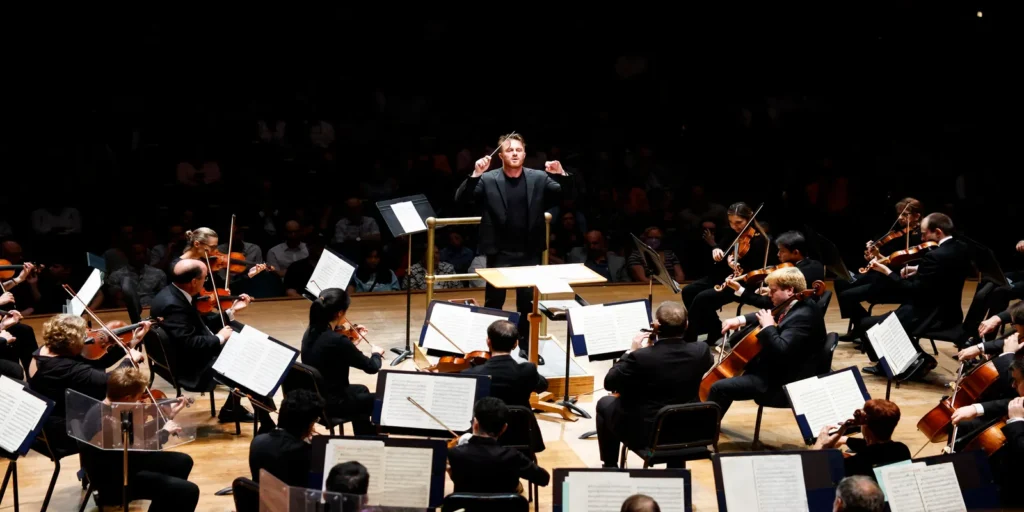
An examination of one of his most well-known works
“Composition VII,” one of Wassily Kandinsky’s most well-known compositions, has important themes, symbolism, and creative elements that highlight his use of vivid colors and geometric shapes. The frantic and dynamic scenario shown in this 1913 abstract painting inspires a sense of cosmic and spiritual force.
“Composition VII” delves into several important subjects, such as the relationship between chaos and order, spirituality, and the possibility of change. Kandinsky intended for the observer to have a mystical and emotional experience with this work since he felt that colors and shapes had innate spiritual properties.
The painting’s numerous shapes, which include triangles, arcs, and circles, all have symbolic meanings. Triangles stand for tension and conflict, while circles are frequently used to signify wholeness and unity. Through their interactions, these symbolic forms produce a pleasing equilibrium between chaos and order.
Kandinsky used strong brushstrokes and vivid colors in “Composition VII” to achieve his creative goals. The geometric shapes are rendered with accuracy and care, and the strong color scheme of blues, yellows, and reds heightens the piece’s emotional effect.
In general, Kandinsky’s “Composition VII” demonstrates his command of geometric shapes and vivid colors, resulting in a profound and striking work that explores themes of spirituality and metamorphosis.
Higdon, Jennifer
American composer Jennifer Higdon is most renowned for her enthralling and forceful orchestral compositions. Throughout her more than three-decade career, Higdon has emerged as one of the most prominent and successful modern composers of her generation. Her distinctive creative style creates a one-of-a-kind and fascinating musical experience by fusing aspects of the classical tradition with cutting-edge and current technology. This article will examine Higdon’s biography, her contributions to the classical music community, and her most well-known compositions and accomplishments. Higdon continues to push the envelope in symphonic music with her ground-breaking compositions, enthralling audiences around with her extraordinary talent and creative vision.
Showcasing one of her well-known pieces
The poem “Become Ocean” by John Luther Adams is extremely important when discussing the Earth’s current dilemma. Slipped Disc cites it as the best orchestral composition of the twenty-first century, and its influence and recognition are indisputable. Adams’ writing captures the growing urgency and worry over the current environmental catastrophe.
“Become Ocean” is more than just music; it’s a sound representation of the dilemma facing our world. The ocean’s vastness and strength, with its ebb and flow reflecting the majesty and ferocity of the natural world, served as the piece’s inspiration. The orchestration captures the music’s ebb and flow, building gradually from a calm and serene moment to an intense crescendo. This is a reflection of the delicate balance that human activity has upset.
Adams reminds us of our interconnectedness with the natural world and the pressing need to confront the problem of life on Earth by engrossing listeners in the grandeur and intricacy of the ocean. The piece is a powerful wake-up call that makes us prioritize protecting the environment and accepting responsibility.
With “Become Ocean,” Adams offers a meaningful musical experience that raises the discussion of environmental issues. This piece’s status as the best orchestral work highlights its capacity to raise consciousness and elicit thought. Adams’ writing catalyzes change, encouraging people to take the initiative and come up with solutions to save and maintain the precarious balance of life on Earth.
MacMillan, James
Scottish conductor and composer James MacMillan is well-known for his enthralling and intensely emotive musical works. Over a few decades, MacMillan has made a substantial impact on the classical music industry and has received several honors and acclaim on a global scale. His compositions are distinguished by their distinctive fusion of traditional and contemporary elements, which are inspired by his Catholic religion and Scottish origin. Apart from his remarkable oeuvre, MacMillan is a highly respected conductor who frequently conducts illustrious orchestras and choirs in his compositions as well as those of other composers. In the field of contemporary classical music, James MacMillan has made a name for himself with his evocative compositions and extraordinary creative vision.
Examining the distinctive style and influences of MacMillan
Renowned Scottish composer Sir James MacMillan is well-known for his distinct influences and style. His songs that are emotionally charged and forceful, like “The Confession of Isobel Gowdie,” demonstrate his unique musical language and capacity to arouse intense emotions.
A variety of musical traditions, including Gregorian chant, Scottish folk music, and modern classical music, have impacted MacMillan’s style. He skillfully combines these inspirations to produce a sound that is both avant-garde and classic. His works frequently combine elaborate melodies, sumptuous harmonies, and sophisticated rhythmic patterns to create a musical experience that is both engrossing and immersive.
MacMillan’s Scottish heritage greatly influences his compositional concepts. He was exposed to the rich musical legacy of Scotland while growing up, especially the traditional Scottish folk music. His use of Scottish folk melodies and rhythms in his compositions, which give his music a distinctively Scottish character, is indicative of this influence.
In addition, MacMillan’s passion for Scottish history is evident in the frequency with which his pieces examine historical themes and events. “The Confession of Isobel Gowdie” is a perfect illustration of this, as it takes its cues from the Scottish witchcraft charges of the 17th century. His musical ideas are profoundly influenced by this historical background, which enables him to produce a piece that is both deeply anchored in Scottish history and incredibly emotive.
Compositions by Sir James MacMillan are emotionally charged and compelling because of his distinctive style, influences, Scottish upbringing, and investigation of historical subjects. He stands out as a composer of truly extraordinary caliber due to his ability to fuse many musical styles and draw inspiration from Scotland’s rich heritage.
Nico Muhly
Contemporary composer Nico Muhly is well-known for his avant-garde and varied approach to music. He has made a name for himself in the realm of classical and modern music by drawing influence from a wide variety of sources, including minimalist composers and traditional choir music. Rich textures, complex harmonies, and the use of electronic components are characteristics of Muhly’s pieces. Apart from his compositional endeavors, Muhly is acknowledged for his partnerships with other artists and his input to the soundtracks of films and operas. He is still pushing boundaries and enthralling listeners with his distinct and compelling musical voice.

Analysis of Muhly’s avant-garde compositional technique
The contemporary composer Nico Muhly is well-known for his avant-garde style of writing. He defies the usual conventions of classical music by embracing unorthodox techniques with fearlessness. Muhly creates a distinctive sound experience by fusing components and inspirations from a variety of musical styles.
The employment of unusual methods in Muhly’s compositions is one of his distinguishing qualities. By employing extended techniques and non-standard playing methods, he explores the possibilities of traditional instruments in novel ways. He might, for example, tell a string player to pluck the strings rather than use a bow, producing a unique sound that defies convention in classical music.
Muhly is renowned for his collaborative methods as well. He regularly works with musicians from a variety of genres, including pop, folk, and techno music. By doing this, he combines various musical viewpoints to create a style that is rich and varied. Through collaboration, he can incorporate new ideas and techniques into his compositions while also fusing a variety of musical influences.
Muhly’s expertise in both classical and modern music plays a significant part in defining his unique style. His background in classical composition provides him with the knowledge and skills necessary to explore non-traditional methods while still grasping the nuances of more conventional composition. In addition, he has broadened his musical taste by working with musicians from different genres and being exposed to modern music, which allows him to easily blend disparate influences into his compositions.
Magnus A. Lindberg
Magnus Lindberg is a renowned Finnish composer and pianist, best known for his unique and innovative style in contemporary classical music. With a career spanning over four decades, Lindberg has earned his place as one of the most influential figures in the modern music world. He has been recognized with numerous awards and honors, including the prestigious UNESCO Rostrum Prize for Composers. Lindberg’s compositions are characterized by their intricate and complex harmonies, rich textures, and unconventional melodies. His music often explores the boundaries of traditional composition, incorporating electronic elements and experimenting with different timbres and instruments. Lindberg’s works have been performed by leading orchestras and ensembles around the world, showcasing his exceptional talent and distinct artistic vision. In addition to his success as a composer, Lindberg is also an accomplished pianist, frequently performing his compositions in concert. His contributions to contemporary classical music have left a significant impact on the genre, inspiring a new generation of composers and pushing the boundaries of musical expression.
Exploration of Magnus Lindberg’s use of musical language in his compositions
Magnus Lindberg, a Finnish composer known for his innovative approach to musical language, has made significant contributions to contemporary music through his use of spectralism and the incorporation of computer technology in his compositions.
Lindberg’s background in spectralism, a musical movement focused on the exploration of sound spectra and the harmonic properties of individual pitches, has greatly influenced his compositions. He incorporates spectral techniques in his works, employing complex timbral textures and manipulating sound spectra to create unique sonic landscapes. This can be heard in his orchestral compositions such as “Kraft” and “Engine”, where he explores the full range of instrumental possibilities, unveiling a rich tapestry of sounds.
Furthermore, Lindberg has extensively integrated computer technology into his compositions. He has utilized computer software tools to aid in the orchestration process, helping to create intricate layers of sound and refine musical textures. This use of computer technology allows for precise control over the overall sonic result and contributes to the complexity and richness found in his works.
Through his exploratory musical language, which draws from spectralism and incorporates computer technology, Magnus Lindberg continues to push the boundaries of contemporary music. With his unique approach, he has created a distinctive spectrum of compelling compositions that captivate both performers and audiences alike.
In summary
In conclusion, the 21st century has proven to be a remarkable era for contemporary classical music. The genre has witnessed a tremendous evolution, encompassing a diverse range of compositions that have challenged conventional notions of classical music.